How Schools Can Encourage Creativity and Critical Thinking in Modern Education
A Unique Perspective: Sri Krish International School’s Commitment to Innovative Learning
In the 21st century, schools must move beyond traditional teaching methods to prepare students for a rapidly evolving global environment. Sri Krish International School stands as a leader in innovative education, offering more than academic excellence by nurturing creativity, critical thinking, leadership, and global competence. The school integrates experiential learning, technology-driven instruction, global exposure, and values-based education to ensure every child becomes a confident thinker, problem-solver, and innovator.
Introduction
Creativity and critical thinking are among the most essential 21st-century skills for students. In a world driven by technology, artificial intelligence, and global challenges, students must learn how to think independently, analyze information, solve problems, and create new ideas. Traditional education systems that focus only on rote memorization and examination performance are no longer sufficient.
Creativity is the ability to generate original ideas, explore possibilities, and design innovative solutions. Critical thinking involves evaluating information, questioning assumptions, analyzing evidence, and making logical decisions. Together, these skills empower students to become lifelong learners, responsible global citizens, and future leaders.
This blog provides a comprehensive guide on how schools can encourage creativity and critical thinking through curriculum design, teaching strategies, learning environments, technology integration, assessment methods, and school leadership, with a special focus on how Sri Krish International School implements these practices at an advanced level.
1. Redesigning the Curriculum for Deep Learning
A curriculum that prioritizes creativity and critical thinking must go beyond rote learning. Schools should integrate interdisciplinary learning, real-world applications, and inquiry-based projects into their academic programs.
Interdisciplinary Learning: Instead of teaching subjects in isolation, schools can design projects that integrate science, mathematics, language, social studies, and arts. For example, a project on climate change can include scientific research, data analysis, persuasive writing, and creative presentations. This approach helps students see the connections between subjects and apply knowledge in meaningful ways.
Inquiry-Based Curriculum: Encourage students to ask questions and investigate topics of interest. Teachers can frame lessons around essential questions such as “Why does this happen?” or “How can we solve this problem?” Inquiry-based learning promotes curiosity and deeper understanding rather than surface-level memorization.
Real-World Problem Solving: Including case studies, simulations, and community-based projects helps students apply their learning to real-life situations. When students solve authentic problems, they develop both creativity and critical thinking skills.
2. Transforming Teaching Methods

Teaching methods play a crucial role in shaping students’ thinking abilities. Traditional lecture-based teaching limits student participation and independent thinking. Instead, schools should adopt learner-centered and interactive teaching strategies.
Project-Based Learning (PBL): PBL allows students to explore complex questions and create tangible products or solutions. For example, students can design a sustainable school garden, develop a mobile app, or create a social awareness campaign. Such projects require planning, research, creativity, collaboration, and reflection.
Problem-Based Learning: Present students with open-ended problems that have multiple solutions. This approach encourages students to analyze, brainstorm, test hypotheses, and justify their conclusions.
Socratic Questioning and Discussions: Teachers can use open-ended questions to stimulate thinking and discussion. Instead of giving direct answers, they can ask students to explain their reasoning, compare perspectives, and challenge assumptions.
Collaborative Learning: Group work and peer discussions help students share ideas, debate viewpoints, and co-create knowledge. Collaboration fosters creativity by exposing students to diverse perspectives.
3. Creating a Supportive Learning Environment
The school environment significantly influences students’ willingness to think creatively and critically. A supportive environment encourages risk-taking, experimentation, and independent thought.
Encouraging Risk-Taking: Students should feel safe to express their ideas without fear of failure or ridicule. Teachers and school leaders can celebrate effort and innovation, even when outcomes are imperfect.
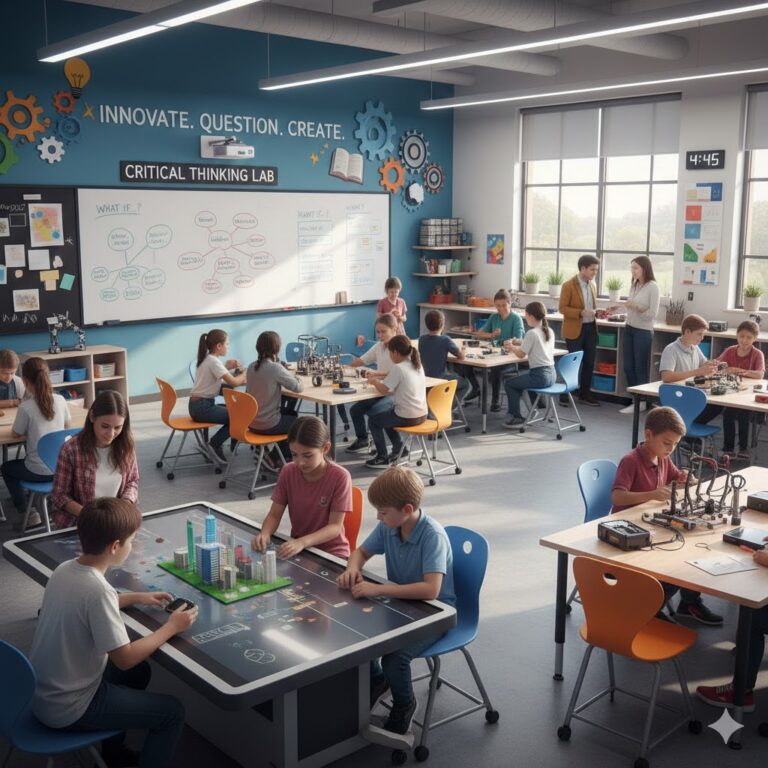
Flexible Classroom Spaces: Classrooms designed with flexible seating, makerspaces, and creative corners inspire students to explore and collaborate. Access to art supplies, technology tools, and hands-on materials enhances creative learning.
Student Voice and Choice: Giving students choices in topics, projects, and learning methods empowers them and increases engagement. When students feel ownership of their learning, they are more motivated to think deeply.
4. Integrating Technology Thoughtfully
Technology can be a powerful tool for fostering creativity and critical thinking when used effectively.
Digital Creation Tools: Students can use digital tools for video editing, graphic design, coding, blogging, and multimedia presentations. These platforms allow students to express ideas creatively and develop digital literacy.
Online Research and Data Analysis: Teaching students how to evaluate online information, analyze data, and identify credible sources strengthens critical thinking skills.
Virtual Collaboration: Online platforms enable students to collaborate with peers globally, participate in virtual exchanges, and engage in cross-cultural projects. Such experiences broaden perspectives and encourage creative problem-solving.
Simulation and Gamification: Educational simulations and games can present complex scenarios that require strategic thinking and decision-making.
5. Assessment for Learning, Not Just Testing
Traditional assessments often emphasize memorization and standardized answers. To encourage creativity and critical thinking, schools must adopt alternative assessment methods.
Performance-Based Assessments: Students can demonstrate learning through projects, portfolios, presentations, experiments, and performances. These assessments evaluate application, analysis, and creativity.
Rubrics for Creativity and Thinking: Clear rubrics can assess originality, reasoning, problem-solving processes, and reflection. This helps students understand expectations and improve their thinking skills.
Formative Assessment and Feedback: Regular feedback during the learning process helps students refine their ideas and thinking strategies. Self-assessment and peer assessment also promote metacognition and reflection.
6. Teacher Professional Development
Teachers are the key drivers of creativity and critical thinking in schools. Continuous professional development is essential to equip teachers with innovative teaching strategies.
Training in Active Learning Strategies: Workshops on PBL, inquiry-based learning, and collaborative teaching methods help teachers design engaging lessons.
Encouraging Teacher Creativity: Teachers should be encouraged to experiment with new teaching approaches, integrate arts and technology, and design interdisciplinary projects.
Professional Learning Communities: Teachers can collaborate, share best practices, and reflect on student outcomes. Collaborative teacher learning enhances instructional quality.
7. Promoting Arts and Creative Expression
Arts education plays a significant role in developing creativity and critical thinking. Music, drama, visual arts, and creative writing encourage imagination, emotional expression, and problem-solving.
Integrating Arts Across Subjects: Teachers can integrate art, storytelling, and design thinking into science, mathematics, and social studies lessons.
Extracurricular Creative Activities: Clubs, competitions, exhibitions, and performances provide platforms for students to showcase creativity and innovation.
Design Thinking and Innovation Labs: Schools can establish innovation labs or makerspaces where students design prototypes, conduct experiments, and explore entrepreneurial ideas.
8. Encouraging Reading, Writing, and Reflection
Language skills are fundamental to critical thinking. Reading diverse materials and writing regularly help students analyze information and articulate ideas.
Diverse Reading Materials: Providing access to fiction, non-fiction, biographies, and global literature broadens students’ perspectives.
Critical Writing Tasks: Essays, debates, research papers, and reflective journals encourage students to evaluate information and express independent opinions.
Metacognitive Reflection: Encouraging students to reflect on their learning processes helps them understand how they think and how they can improve.
9. Building Partnerships with Parents and Community
Creativity and critical thinking extend beyond the classroom. Schools can collaborate with parents and community organizations to provide real-world learning opportunities.
Community Projects: Students can engage in service-learning projects, internships, and collaborations with local organizations.
Parent Workshops: Schools can educate parents on supporting creative and critical thinking at home through discussions, reading, and problem-solving activities.
Industry and University Partnerships: Partnerships with industries and universities can provide mentorship, workshops, and exposure to innovative fields.
10. Leadership and School Culture
School leadership plays a vital role in fostering a culture that values creativity and critical thinking.
Vision and Policy: School leaders should include creativity and critical thinking in the school’s vision, mission, and policies.
Recognition and Incentives: Recognizing innovative student projects and teacher initiatives encourages a culture of innovation.
Continuous Improvement: Schools should regularly evaluate teaching practices, curriculum effectiveness, and student outcomes to enhance creative and critical thinking initiatives.
Challenges and Solutions
While promoting creativity and critical thinking is essential, schools may face challenges such as curriculum overload, exam-oriented systems, limited resources, and teacher resistance to change.
Balancing Exams and Innovation: Schools can align creative projects with curriculum objectives and assessment standards.
Resource Constraints: Even low-cost materials, open-source digital tools, and community partnerships can support creative learning.
Teacher Support: Providing mentoring, training, and time for lesson planning helps teachers adopt innovative practices.
Conclusion
Encouraging creativity and critical thinking in schools is a transformative journey that requires changes in curriculum, teaching methods, assessment, environment, and leadership. By fostering inquiry, collaboration, innovation, and reflection, schools can prepare students for a future that demands adaptability and problem-solving skills. When students are encouraged to think independently, explore new ideas, and question assumptions, they become lifelong learners and innovators who can contribute meaningfully to society.
In the 21st century, schools are not just centers of knowledge transmission but hubs of creativity, critical inquiry, and human potential. By embracing these principles, educators and school leaders can shape a generation of thinkers, creators, and leaders ready to face the challenges of tomorrow.
Why Sri Krish International School Stands Out – Unique Reasons
Sri Krish International School does not just follow educational trends; it sets benchmarks in nurturing creativity and critical thinking. Some of the unique features that distinguish the school include:
- Personalized Learning Pathways: Each student is guided through personalized academic and skill-development pathways, ensuring that individual talents and interests are recognized and nurtured.
- Global Learning Exposure: The school integrates international curricula, global projects, virtual collaborations, and international competitions, helping students develop a global mindset and cross-cultural critical thinking skills.
- Innovation and Research Culture: Students are encouraged to conduct mini-research projects, innovation challenges, and science and technology fairs that stimulate inquiry and original thinking. Gallery – Sri Krish International School Kovur
- Leadership and Life Skills Training: Beyond academics, the school emphasizes leadership programs, student councils, entrepreneurship activities, and community service initiatives that foster independent decision-making and problem-solving abilities.
- Strong Focus on Values and Ethics: Creativity and critical thinking are guided by strong ethical values, empathy, and social responsibility, ensuring students become responsible innovators and compassionate leaders.
- Advanced Learning Infrastructure: Smart classrooms, digital learning platforms, makerspaces, libraries, and laboratories provide students with the tools to explore, experiment, and innovate.
- Teacher Mentorship and Coaching: Teachers act as mentors and facilitators, guiding students through inquiry, reflection, and creative exploration rather than traditional rote instruction.
- Parent and Community Engagement: The school actively involves parents and the community in learning programs, workshops, and collaborative projects, extending creativity and critical thinking beyond the classroom.
Final Note
Sri Krish International School truly delivers more than what is described in theory. Awards & Achievements – Sri Krish International School By combining academic excellence, innovation, global exposure, and strong values, the school prepares students not just for exams, but for life, leadership, and the future world. It stands as a model institution where creativity and critical thinking are not just taught, but lived every day.